How to Pick the Right Formula for Your Baby
Ready to learn about organic vs non organic formula? Trying to effigy out how on globe to choose the best organic formula for your baby? I'1000 here to help!
Because I know that you formula feeding and supplementing mamas need support too! And what's more, picking a dang formula can be a seriously overwhelming process!
Here nosotros're going to unpack organic vs. not organic, but also learn about why the source of unlike nutrients matter, too. You'll besides get a flake of a primer on European formulas and what the hype is all about.
Ready? Let's become you on your style to picking the right formula for your baby!
- My feel with formula feeding
- Baby formula requirements: An overview
- Baby formula ingredients
- Organic vs non organic formula
- How to choose the best baby formula?
- Which is the best organic babe formula?
If you haven't already, please feel free to join over 300k new moms and follow me here on Instagram for crawly pregnancy + birth tips!
My experience with formula feeding
If y'all've spent any time around Mommy Labor Nurse, you lot know that I am a big breastfeeding advocate, and I love to provide expecting and new mamas with support in making breastfeeding work if that'south important to them!
BUT did y'all know that I'grand equally as passionate most the fed is best motion? I know how challenging breastfeeding can exist, and I'thou on a mission to denounce the guilt and negative narrative that often comes with the decision to formula feed (or even supplement!).
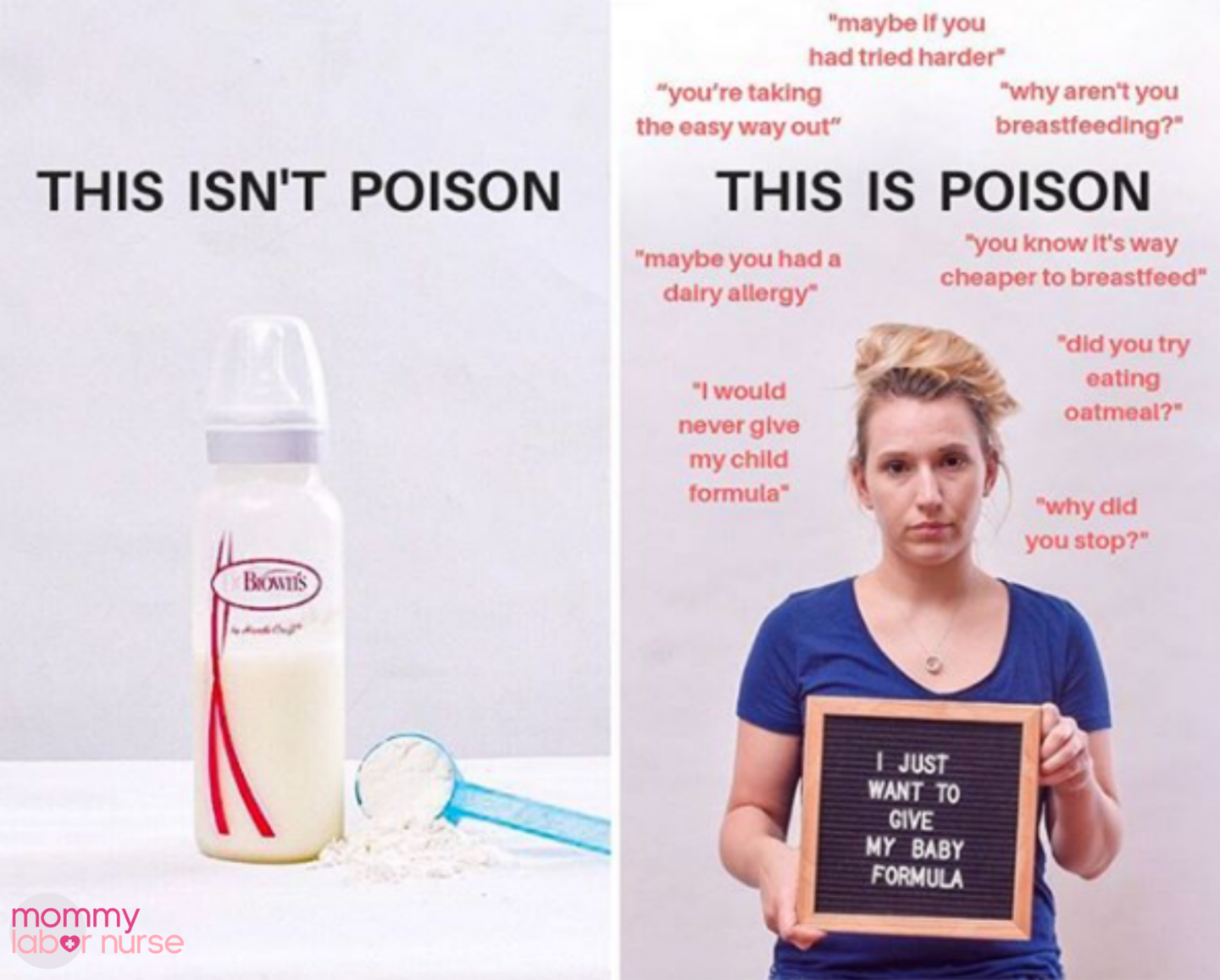
With my showtime, I struggled difficult with depression supply and my little one had issues gaining weight. I felt so much mom guilt when I started supplementing with formula. AND I DON'T WANT THAT FOR YOU.
What's more, it'south so dang hard to find succinct and reliable data well-nigh how to formula feed properly and (the topic of this article!) how to cull a formula!
Baby formula requirements: An overview
Okay, when it comes to selecting a formula, a common question a lot of mamas face is organic vs non organic formula. I think a lot of the states acquaintance "organic" with being ameliorate, and (existent talk) being more expensive.
And then, let'south first by talking well-nigh formula in general. All formula sold hither in the US is subject to very strict nutritional standards. In fact, when Mallory from The Formula Mom came onto my podcast, she explained that formula is the unmarried nigh strictly regulated food product that y'all can buy.
Nothing goes through more than safety testing, nutrient testing, packaging testing, etc. than baby formula (organic or non organic!)
Formula is VERY carefully regulated
That'due south considering information technology'southward subject to FDA regulations. It's basically treated like a medical product – and for good reason! And this fact alone should seriously put your mind at ease. What's more, formula is also ane of the well-nigh nutrient-dense items you can purchase. It's designed to closely mimic the nutritional profile of breastmilk.
Pay attention to nutrient sources as much as organic vs non organic formula
Where formulas Do differ is just how they become the breastmilk-like food contour. The composition tin vary widely, and this is what we'll swoop into a petty more today.
In fact, some experts actually say it may be more (or at least equally) important to look at what ingredients are being used to see nutritional requirements (more on this below) than whether they are organic or non (source).
Babe formula ingredients
So, all baby formulas in the US are required to run into federal nutritional requirements. Co-ordinate to the FDA, this includes minimum amounts of 29 ingredients and maximum amounts for 9 of those nutrients.
Considering of this, when you look at the diet facts on the back of any container of formula, information technology's going to basically look the same! Information technology'due south the ingredients that bear difference, and can disclose the information that's worth digging into equally you acquire more about formulas, and how to cull the best baby formula for your family unit.
And so let's have a look at some of the types of ingredients and why their source matters!
Sweeteners used in baby formula
The number ane goal of formula is to mimic the nutritional profile of breast milk as closely as possible. And the fact is, breastmilk is sweetness. And this is because it contains much more lactose than moo-cow's milk. Then, all formulas (even those fabricated with cow'south milk, which has some lactose) have to add together in more than sweetener.
In fact, the source of saccharide is usually the very first ingredient listed for formulas, so it's easy to effigy out how this particular formula is being sweetened!
Lactose is best (when safety for baby!)
The best option is lactose! That's because it is the most like to homo milk. Lactose is literally milk sugar! Formula regulations in the EU country that whatever cow'due south milk formula with in-tact proteins (that is all formulas that aren't hypoallergenic) can Merely use lactose. No other sweeteners are permitted!
And for formulas that are hypoallergenic, they say that sucrose cannot make up more than than twenty% of the formula. In that location are no such regulations on Us formulas (and in some cases other forms of sweeteners brand upward 50% of the formula!).
Why don't they all utilise lactose?
And then why practice companies apply other sweeteners if their less desirable? Lactose is an expensive ingredient. Specially organically sourced lactose . Expensive for the manufacturer, and in turn, more expensive for the consumer.
And so, in club to cutting product costs, formula manufacturers have turned to other sources of carbohydrates. Over again, peculiarly in organic formulas.
Other sweeteners that formula companies use
- Corn Syrup (glucose; maltodextrin): This is considered less desirable than lactose just should NOT exist confused with high fructose corn syrup. In short, corn syrup is considered safety past the FDA for use in infant formulas and is the preferred sweetener in Eu-based hypoallergenic formulas. If your infant has a serious cow's milk protein allergy, and reacts to any amount of lactose, corn syrup is the well-nigh desirable alternative
- Rice Syrup: Rice syrup is a less common formula-sweetener in the Usa, but is found in some organic formulas. The concern here is that some rice syrups accept high concentrations of arsenic. Nature's Ane is a popular organic formula make that uses rice syrup, and they country that they rigorously check for detectable levels of arsenic in their product.
- Sucrose (pikestaff sugar): This is your basic table sugar, and is some other sweetener we sometimes see in organic formulas especially. The issue here is that this carbohydrate source is merely WAY Manner sweeter than breast milk or lactose.
Palm Oil (palm olein) in infant formula
All baby formulas take a fatty source in their ingredients. And this is considering breastmilk is chock full of fat! The fat constitute in human milk is chosen palmitic acrid. Only this is Not the same every bit palm oil – which is constitute in many infant formulas.
You see the concern surrounding the employ of palm oil is that more and more studies are finding that information technology tin lead to constipation and causes some babies to poorly absorb fat and calcium which in plow means less free energy is absorbed. Information technology may also atomic number 82 to lower bone density (source).
The matter is, many formulas on the marketplace apply palm oil. 2 large US based formulas that Do NOT contain palm oil are Similac and Baby's Merely.
A annotation nearly Baby's Only formula
Note: Baby's Merely formulas have been mentioned a few times, and while they are pretty crawly in terms of ingredients, they are not FDA approved for use in babies under one and are labeled a "toddler formula".
They are especially designed for babies that are transitioning away from breastmilk. Some parents practice you lot use it prior to one (peculiarly if you are supplementing chest milk) but this should not be done without supervision of your pediatrician.
DHA and ARA
DHA is an omega 3 fatty acid and ARA is an Omega 6 fat acrid; both of which are found in human milk and are cardinal parts of brain development. So, synthetic versions of these are frequently added to formula.
These are not a required nutrient hither in the US, only in 2020 the EU started requiring the add-on of DHA to regulated formulas over there.
The AAP doesn't have an official stance on the utilize of DHA in infant formula, and right not in that location isn't a lot of definitive research on their benefits, merely there also aren't a lot of drawbacks.
Adept news – they're very mutual
Very Well Family cites 1 study from 2014 that found babies who received formula containing DHA and ARA may have fewer instances of respiratory illness.
The bottom line is that there is some uncertaintly here, but MOST formulas are adding information technology anyway, and then it's not very hard to detect an pick that contain DHA and ARA.
Carrageenan
This is added to some ready-to-go formulas, same little bottles they give you lot in the hospital. It is simply added so you don't have to shake the canteen of formula.
The problems with carrageenan is that information technology is linked to gut issues and intestinal inflammation in animal studies (source).
Synthetic ingredients
So, the FDA requires 29 essential nutrients, but some of these can only be created synthetically (source). These include lycopene, lutein, taurine, and L-Carnitine.
Getting into these is a little fleck outside of the scope of my expertise (and this commodity), but it'southward worthy to note that many of these ingredients are banned in European formulas.
Organic vs non organic formula
Okay. Now that yous kind of take an thought of different sources to be aware of for required nutrients, permit's look more specifically at organic vs non organic formula. This is another regulation that is put in place by the FDA and carries real weight.
Organic formula
In order for a baby formula to exist labeled USDA organic, it must encounter the same criteria as any other item bearing this characterization in the US. These criteria are regulated by the US section of agronomics (not the FDA). Here'southward a quick breakdown of the requirements for nutrient (or formula!) to have an organic characterization:
- GMO-free: the formula cannot incorporate any genetically modified ingredients
- Milk must be sourced from moo-cow's (or goats!) that are fed organic feed and not given any growth hormones
- Crops, where ingredients are sourced, cannot be treated with pesticides or chemicals
- In other words: all agricultural ingredients must be certified organic
- Certain canonical non-organic ingredients are permitted just can only make up a total of 5% of the content
For more details on this, here is the USDA handout on Organic Labeling and The National List of Allowed and Prohibited Substances.
Is organic formula improve?
The big point I've wanted to drive dwelling so far is that in a lot of ways, the source of the nutrient is and so of import (especially when it comes to sweeteners and fats), but for many us, organic ingredients are too very important.
When you cull a formula that's certified organic you do drastically decrease your child'south potential exposure to harmful chemicals, toxins, and hormone disruptors that may be present in conventional ingredients. These types of toxins are establish in pesticides, feed, and product of the ingredients used in conventional formula.
But it may not exist in your budget – and that's okay!
But mama, I get it! I know that organic formula ofttimes comes with a steeper cost tag and may not be a reality for your family unit. AND THAT'S OKAY. My goal is NEVER to leave y'all feeling guilty, but instead to educate. Below we'll look at some options at unlike price points.
For many, the option to feed our children (and selves) organic for the whole life simply isn't in the upkeep. But, prioritizing an organic option very early in their life may be beneficial to their developing immune systems, brain, and endocrine functions (source).
Non-GMO formula vs regular formula
And so, this is a specific question that comes up a lot, and while I pretty much answered it above. I wanted to put information technology in plainer terms.
If a not-GMO formula is a priority for you lot, so y'all need to choose an organic formula! The USDA organic certification guarantees against the use of genetically modified ingredients in infant formula.
You may run across some non-organic formulas that are labeled "not-GMO" but this label is really non federally regulated (source)! In that location are some independent organizations, including the non-GMO project, that offering rigorous standards for their non-GMO label, which is great.
Just I practise think it'south important for parents to know that the only formulas that are federally regulated to be not-GMO are organic options.
While nosotros're on the topic of labeling, hither are a few other labels that are NOT federally regulated, certified, or tested:
- Hormone-costless
- Raised without antibiotics
- Not-GMO (already discussed)
- All natural
- Free range
Once again, some of these are encompassed in an organic certification, but on their ain these labels are not tested for or certified. While information technology'south entirely possible that the company is telling the truth, in that location is no third-party verification.
Yous tin can read more near labeling regulations in general (which also employ to formula!) hither.
What about European baby formula?
Some of you may be wondering about European baby formula. This often becomes office of the conversation because the EU has much stricter regulations on formula in general than we exercise hither in the United states.
Perhaps most notably, surrounding the type of saccharide (sweetener) that tin be used. European formulas cannot use sucrose (table sugar), glucose, fructose, rice syrup, or carrageenan.
For this reason, and for mamas where ingredient sourcing and safety is a top priority, going with a European option is highly-seasoned.
In fact, in 2020, they made more than official changes to their nutrient requirements including a slight increment in the corporeality of Vitamin D and choline, and that ALL infant formulas must contain DHA!
US experts business with EU formulas
And while a lot of that is really skillful, some experts here in the United states of america practise see potential bug with using European formulas. Many believe that they don't crave an acceptable amount of iron.
There is also a lack of teaching among some United states parents about the dissimilar stages of EU formulas which tin can lead to nutritional deficiencies if parents don't switch stages as their baby grows.
Lastly, sometimes instructions may be in another language leading to unintended misuse (source).
How to choose the best babe formula?
When information technology comes to choosing the best baby formula, I like how Mallory (The Formula Mom) put it when she was on my podcast, in that location is no i best formula for every baby or family! In that location are then many different options out there, and that'due south considering nosotros all take unlike priorities and needs.
It's also actually normal for in that location to be some amount of trial and fault where y'all watch for how baby reacts and how it's working for your family.
Per @theformulamom, here are some things to consider when choosing the right formula include:
- Infant's needs (ie: allergies, intolerances, etc.)
- Family's needs (ready-made, availability, budget)
- Organic vs. Not Organic
- Ingredient preferences
- Pediatrician guidance and recommendations
To find the best babe formula, you lot really demand to weigh ALL of those factors to come to a conclusion that works all-time.
Which is the best organic babe formula?
The curt respond is that I can't choose that for y'all! For my family unit, an organic choice felt important, and after some trial and error I landed on Globe'southward Best for my first. We had no issues and accommodating really liked it!
Other pop organic baby formulas
- Happy Baby Organic Formula
- Similac Organic
- HiPP Formula (Eu-based)
- Holle Formula (EU-based)
- Baby's Merely (for those over 1 yr erstwhile, or for those supplementing breastmilk under the guidance of a pediatrician)
In a higher place all, I encourage you to consider YOUR family unit and your baby's needs! I highly, highly recommend checking out the resources on formula over at The Formula Mom to help with this.
She has a free guide to formulas in full general, then also offers personalized recommendations and one-on-ane counseling to detect the perfect and all-time formula (organic or not!) for your family.
The bottom line is that in that location is no one size fits all. Whether that'southward an organic formula or not!
What do YOU think is the best organic babe formula? Or what formula did you lot decide on for your baby? I'd dear to hear!
Source: https://mommylabornurse.com/organic-vs-non-organic-formula/
0 Response to "How to Pick the Right Formula for Your Baby"
Post a Comment